

Editor’s Note: A tension exists between America’s climate goals and the pursuit of great power competition with China. There is also the Chinese energy paradox: China remains a leading global polluter, while also being a world leader in the production of green technologies. Indeed, China is oversupplying green technology to domestic and world markets. In navigating these tensions, U.S. policymakers and their counterparts in Europe must weigh the relative importance of climate goals, competition with China, and managing international trade. The authors of this policy brief are well-placed to comment on these issues: Ansgar Baum is a nonresident senior fellow with the Strategic Foresight Hub and the Reimagining U.S. Grand Strategy Team; a veteran of various tech firms, he writes widely on geopolitics and the role of technology. Thomas Ramge is a researcher at the Einstein Center Digital Future in Berlin and a bestselling author whose works on technology trends focus on understanding how they change society and the economy.
By Emma Ashford, Senior Fellow, Reimagining US Grand Strategy
As of fall 2024, US-China trade relations remain strained. Tensions over technology restrictions, tariffs, and subsidies that undermine fair competition persist. The United States continues to impose export controls on advanced semiconductors and other critical technologies, while China has responded with retaliatory policies, including boosting its domestic industries to reduce reliance on American technology. Trade hawks dominate debate and statecraft on both sides of the Pacific, with few signs of a willingness to engage in a more cooperative relationship that would yield mutual benefits, as globalization once promised.
Chinese Green Tech Overcapacity
Major problems within the global trade system need to be resolved. China produces too much stuff, particularly green technologies such as electric vehicles (EVs), lithium batteries, and solar panels. Although such technologies help to stabilize the climate, Chinese overcapacity — a situation in which supply exceeds global demand — has become a destabilizing factor in international trade.
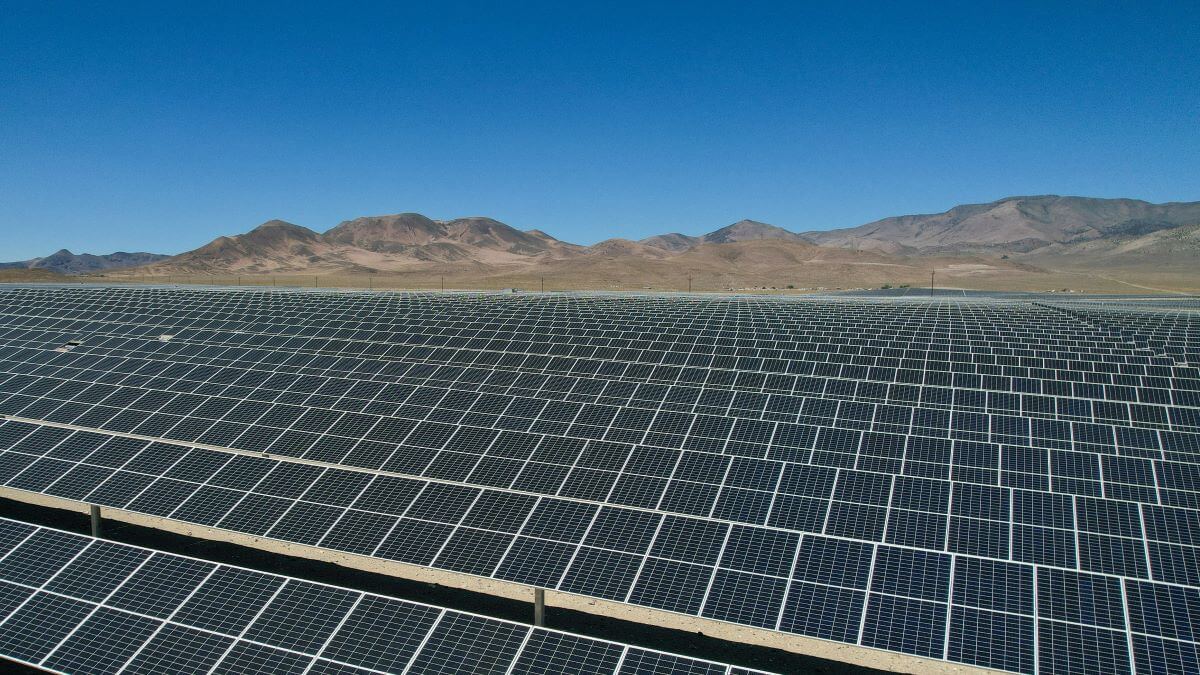
- China’s production capacity for photovoltaics (i.e., solar panels) is already twice as high as global demand and is expected to grow by another 50% in 2025.
- Its production of lithium-ion batteries exceeded 1.9 times the volume of domestically installed batteries in 2022, and the capacity utilization rate — the number of these batteries that are actually used in car manufacturing — is now at roughly 64% (with a rate of 80% regarded as sustainable).
- Chinese carmakers churned out about 6.5 million battery electric vehicles (BEVs) in 2023. These vehicles rely entirely on battery-stored electricity, and constitute more than half of the world’s total EV production, much more than global markets are currently willing to absorb.
Critics of China see overcapacity as a “deliberate strategic whole-of-society tool” to corner international markets in key strategic sectors, aiming for quasi monopolies fostered by price dumping — and then leveraging the economic dependency for geopolitical purposes. This is like a big supermarket chain coming to town, keeping prices low until small competitors go bankrupt, and then hiking prices.
An alternative interpretation for Chinese overcapacity is the fundamental problems of a planned economy. While the Soviet Union notoriously did not produce enough of anything, central planning in China has more often led to the overproduction of Chinese goods and technologies. Identifying a strategic economic sector by party officials often leads to subsidies, often triggered by a competition among regional governments to attract corporate investments, leading to too much supply for domestic and international markets to absorb.
The consequence of China’s market distortions is an unhealthy race toward even more production, as companies struggle to make profits and service their debts. Overcapacity is not in the interest of Chinese manufacturers because it depresses prices to unsustainable levels. As Zongyuan Zoe Liu, a researcher at the Council on Foreign Relations pointed out, in 2023 many Chinese car manufacturers — betting heavily on EVs — lost money. What looks like a nefarious geopolitical strategy from Capitol Hill, looks more like a blunder of the planned economy to the CEO of an affected Chinese car company.
Meanwhile, the importance of green tech to the Chinese economy is growing rapidly. According to the Centre for Research on Energy and Clean Air, green tech industries accounted for 40% of China’s GDP growth in 2023 and 4.5% of its exports.
Ironically, China itself has not done enough to put its ample clean tech into use. The country’s commitment to become carbon-neutral as late as 2060 makes the goal of keeping global warming below 2 degrees unattainable. One of the main problems is the ongoing reliance on coal — which is both cheap and available — as the main source of energy in China. While millions of new EVs enter Chinese roads, more than 50% of the energy they consume comes from burning coal. In 2023, China’s emissions rose by 5%. Climate Action Tracker and others criticize China’s climate policies as particularly insufficient.
Reactions to Overcapacity: Are Tariffs the Solution?
Western think tank analysts and policymakers have been quick to frame overcapacity as a problem that is best solved with import tariffs or quotas. The United States has already placed hefty tariffs on EVs. Europe is also following this path, imposing tariffs of up to 45% on Chinese BEVs. These new tariffs are combined with huge subsidies packaged as new green deals on both sides of the Atlantic. This renaissance of protectionism and old-school industrial policy is based on the assumption that protecting native industries from ruinous foreign competition and preserving knowledge and manufacturing capacities is worth taxpayers’ and consumers’ money.
In addition, a geopolitically motivated trade war between China and the United States is already spreading to raw materials that are key to green tech applications. Many of these raw materials critical to green tech are mined or refined in China. Developing alternatives to Chinese supplies would be incredibly expensive and time-consuming, thus guaranteeing access to such raw materials is of paramount importance. Worryingly, China has signaled that it might consider export controls on such raw materials in cases of a further expansion of U.S. tech export controls. For now, Beijing has been reluctant to do so, acknowledging the escalatory potential of such a move.
Alas, all these measures will have a concerning consequence: Green tech will become more expensive in the coming years — and fall on the backs of consumers in the United States, Europe, and China while slowing down the green transition. Subsidizing production at home and placing tariffs on green tech from abroad is economic nonsense. Using cleantech as a tool of geopolitical competition is irresponsible because it undermines the globally shared goal of limiting global warming. If the latest G7 leaders’ communiqué is to be taken seriously, it is hard to see how green tech tariffs can be squared with the “steadfast commitment” to the Paris Agreement and “keeping a limit of 1.5°C global temperature rise within reach.”
Indeed, Chinese overcapacity could turbocharge climate tech dissemination. In an ideal world, raw materials required for green tech and its applications would be as cheap and widely accessible as possible. Such materials and applications should be exempt from any attempts to “weaponize” them for geopolitical purposes — accepting the fact that abundant green technology is key to avoiding potentially catastrophic consequences of climate change.
The bottom line is this: From a climate policy perspective, there is no such thing as “overcapacity” in clean tech. While geopolitical policies seem to demand a crackdown on overcapacity, climate policies demand the opposite. Policy linkage that both addresses China’s overcapacity problem and mitigates or reverses climate change is currently absent from the discussion.
Linking Climate Commitments to Overcapacity: Toward a Meaningful Green Deal
As any professional negotiator can attest, by far the most important part of a successful strategy is to know exactly what each side wants. This might sound trivial, but it is not. In the case of green technology, the United States and its partners want an inhabitable planet, for which green tech is key. Tariffs on Chinese green tech do not serve any purpose by themselves and interfere with achieving this high-priority goal.
A second key ingredient of a good negotiation strategy is what academics describe as “issue linkage,” or what one might colloquially call “horse trading”: knowing how to link independent issues to achieve a joint settlement. This approach requires looking beyond seemingly incompatible policy goals in one area and binding them to another set of goals from a different policy field.
One possible linkage is to tie Chinese market access for green technology directly to Beijing’s own behavior. Indeed, though the United States and others should insist on addressing the overcapacity problem in the medium term, in the nearer term, while overcapacity still exists, they should offer a straightforward deal: If China commits to speeding up cutting CO2 emissions and keeping raw materials off any export control lists, the United States and Europe will abstain from imposing tariffs on green tech.
Let’s unpack this. First, China’s commitment to become carbon-neutral by 2060 is widely regarded as one of the single biggest obstacles to climate mitigation — this timeline is simply way too slow. The United States and its allies should propose a more specific, trackable policy as part of this deal: a specific plan to build and activate fewer new coal power plants and remove older ones from the power grid faster. Progress could be easily monitored. On the other side of the ledger, both sides should agree on a moratorium on tariffs as well as export controls that affect green tech.
Of course, issue linkage is a complicated task — primarily because of domestic politics. Making any kind of deal with China is seen as unsavory by some U.S. policymakers and is easily exploited by political opponents. In short, issue linkage is good policy — but bad politics. Yet it is also self-defeating to label any attempt to re-enter a more cooperative relationship with China as a sign of weakness. The notion that there will be no Western green industries without tariffs and subsidies is not only questionable from an economic perspective, it is also strangely lacking in Western self-confidence and inventiveness.
Conversely, building national industries based on an overly ambitious industrial policy has rarely worked out for Western countries in recent decades. Some technocrats in Brussels indulge in Airbus nostalgia, remembering the case of a successful national champion in the aerospace section. But Europe has not caught up in other industries — neither in chipmaking nor cloud computing — despite hefty political and economic incentives. In the United States, solar panel subsidies failed to have any significant impact, either. Tesla and BMW are competitive in EVs not because of mid-20th-century mercantilism but because of innovation and good management. GM and Volkswagen will not succeed in global competition with greener cars because of tariffs on well-designed and -engineered models of Chinese carmakers like BYD, SAIC or Geely — or battery factories paid for by American or German taxpayers. They will succeed if they build the right cars for their customers for the right price.
The current Western choice is not tariffs vs. profitable green industries at home, as many pundits in favor of ample green subsidies frame it. A better choice would be making cleantech from China much more expensive while creating a generation of companies not adding any cleantech innovation at home. Western states should focus on research and innovation in climate tech — with private and public funds — to ensure that the next generation of EVs, energy storage systems, and possibly nuclear fusion reactors from the United States and Europe find markets all over the world. Highly innovative green industries in the West would also ensure that in the long run, dependence on Chinese green tech will decrease, rather than increase as trade policy hawks often fear.
In the meantime, it would be short-sighted not to take advantage of low-cost Chinese standard solar panels to speed up the green energy transition. While China undoubtedly produces a surplus of green technology, this overcapacity could be a boon for the transition to clean energy. It certainly does not hinder Western innovators from building green companies on their own. If Washington wants to avoid an ever-expanding US-Chinese great power competition that subdues every policy field to a zero-sum logic situation and makes joint efforts like fighting climate change impossible, issue linkage is the way out. Climate policy is one of the few policy arenas where global cooperation seems currently possible; a meaningful global green deal could pave the way.










Community Adaptation for a Water Festival Without Clean Water